Why insulation matters for Columbus garages
Columbus winters are real — January averages in the mid-20s with cold snaps pushing into single digits. The garage door is typically the largest and least insulated surface in a home's thermal envelope. On an attached garage, that means a significant amount of cold radiating through the door into spaces adjacent to your living areas.
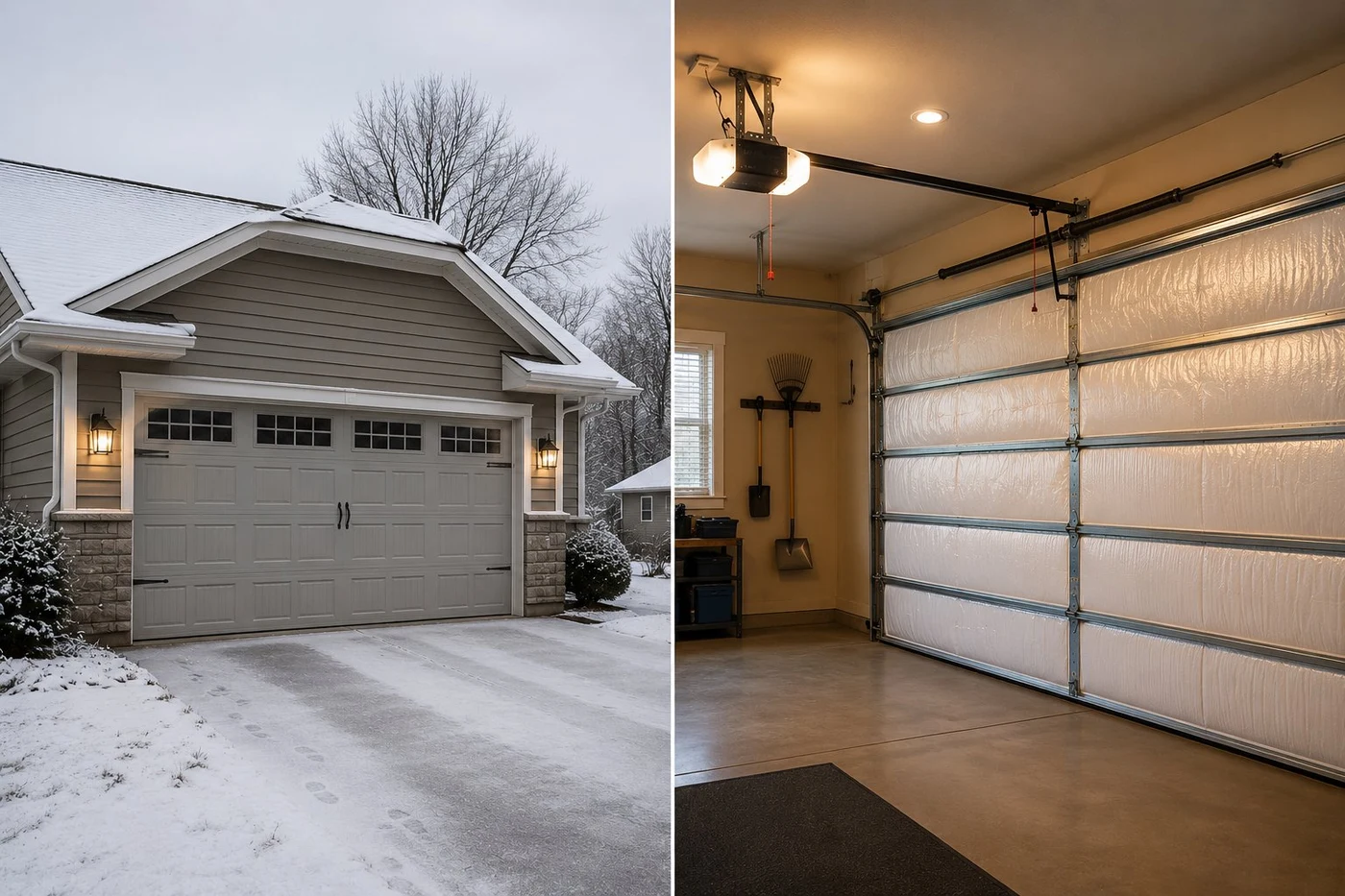
Understanding R-value
- R-6 to R-9 (single-layer or light double-layer): Minimal insulation. Better than nothing but not meaningful for temperature management. Common on builder-grade doors.
- R-12 to R-13 (double-layer): Practical minimum for an attached Columbus garage. Will keep the garage noticeably warmer on a cold January night.
- R-16 to R-18 (triple-layer): Meaningful insulation. Recommended for living space above or adjacent to the garage, or if you heat the garage. Also adds structural rigidity and reduces noise.
- R-20+ (high-end): Available in premium lines. Diminishing returns for most Columbus homes but appropriate for heavily-conditioned garage spaces.
"We replaced a builder-grade single-layer door in Westerville for a homeowner with a finished bonus room above the garage. She had been dealing with cold floors and high heating bills every winter. Triple-layer R-18 door went on in October. She called us two months later to say she had noticed a real difference in the room. That is not unusual when you go from a single-layer door to a properly insulated one."
Single, double, or triple layer?
Single-layer: one steel sheet, no insulation. Dents easily, transmits cold directly, noisy. Fine for a detached garage or budget-constrained situation where the space does not connect to living areas.
Double-layer: insulation bonded to the back of the steel panel. Significantly better thermal performance and quieter operation than single-layer.
Triple-layer: insulation sandwiched between two steel skins. Most rigid, quietest, and best-insulating construction. Also more dent-resistant. For an attached Columbus garage this is the upgrade we recommend when replacing a door.
Insulation questions
How much more does an insulated door cost?
Double-layer costs $150–$300 more than single-layer. Triple-layer adds another $100–$200. Modest premium relative to total installation cost.
Does insulation actually save money?
For attached Columbus garages with conditioned adjacent spaces, yes. Modest but real savings. The bigger benefit is comfort in adjacent rooms.
What about weatherstripping?
Insulation and weatherstripping work together. An insulated door with bad weatherstripping still leaks cold air at the sides and bottom. We check and replace weatherstripping on every door installation.
Can I add insulation to my existing door?
Retrofit kits exist and are modestly effective but add weight that existing springs may not handle. If the door is aging anyway, a new insulated door is usually the better long-term call.